Where is Marrakech Located? The Ultimate Gateway to the Morocco Desert
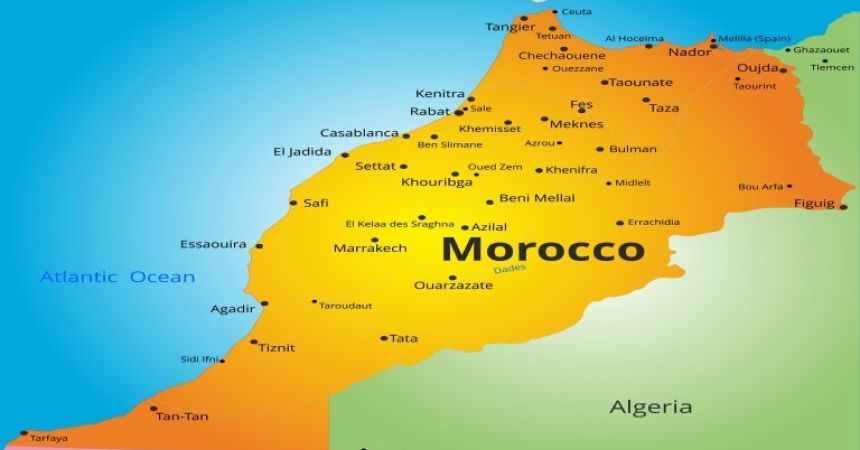
If you are planning a trip to Morocco, one of the first questions you might ask is: Where is Marrakech located? Known as the “Red City,” Marrakech is more than just a destination; it is the heartbeat of Morocco and the primary gateway for those looking to explore the High Atlas Mountains and the Sahara Desert.
In this guide, we’ll explore the geographic importance of Marrakech and why it is the perfect starting point for your Morocco desert tours.
The Geography of Marrakech
Marrakech is situated in the mid-southwest of Morocco, nestled at the foot of the snow-capped High Atlas Mountains. It sits approximately 240 km (150 miles) south of Casablanca and 580 km southwest of Tangier.
Strategically located between the Atlantic coast and the Sahara, Marrakech has served as a major trading hub for centuries. Its location is unique because it offers a “triple landscape” experience:
- The Urban Medina: A bustling, ancient city center.
- The Atlas Mountains: Just an hour’s drive to reach alpine scenery and Berber villages.
- The Desert Gateway: The starting point for the famous road to the Merzouga dunes and Erg Chebbi.
Why Marrakech is the Best Starting Point for Desert Tours
For travelers booking a Sahara desert expedition, Marrakech is the most logical choice for a departure city. Most of the iconic sights you see in photos—like the Kasbah of Ait Ben Haddou or the Dades Gorge—are located along the route from Marrakech to the desert.
- Tizi n’Tichka Pass: To get to the desert from Marrakech, you will cross this famous mountain pass, reaching an elevation of 2,260 meters. It offers some of the most breathtaking views in North Africa.
- Proximity to Ouarzazate: Known as the “Hollywood of Africa,” this desert city is only 4 hours away from Marrakech and serves as the entrance to the deep Sahara.
- Diverse Itineraries: Whether you have 3 days or 2 weeks, starting in Marrakech allows you to loop through the desert and either return to the Red City or end your journey in Fes.
Top 5 Things to Do in Marrakech
Before you head into the “geography of silence” in the desert, make sure to spend at least two days exploring the city itself:
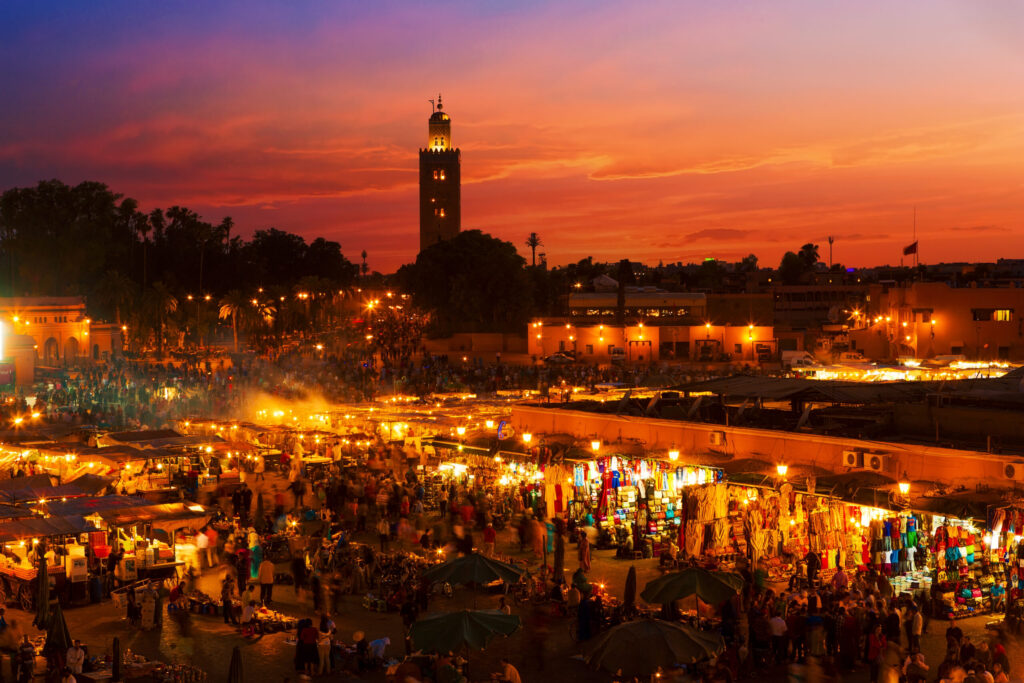
- Jemaa el-Fnaa Square: The soul of Marrakech. By day, it’s a marketplace; by night, it transforms into an open-air theater with food stalls, musicians, and storytellers.
- The Koutoubia Mosque: The tallest landmark in the city, providing a perfect example of Moorish architecture.
- The Souks of the Medina: Get lost in the labyrinth of stalls selling everything from hand-woven carpets to authentic Moroccan spices.
- Bahia Palace: A masterpiece of 19th-century design, featuring incredible tile work (Zellij) and lush courtyard gardens.
- Majorelle Garden: A peaceful botanical oasis featuring the famous “Majorelle Blue” villa and exotic plants from five continents.
Travel Tips: Getting to Marrakech
- By Air: Marrakech Menara Airport (RAK) is one of the busiest in Morocco, with direct flights from most major European cities.
- By Train: Morocco’s high-speed “Al Boraq” and standard train networks connect Marrakech easily to Casablanca, Rabat, and Fes.
- Best Time to Visit: Spring (March to May) and Autumn (September to November) offer the most pleasant temperatures for both city sightseeing and desert trekking.
Frequently Asked Questions: Traveling to Marrakech, Morocco
What country is Marrakech in?
Marrakech is located in the Kingdom of Morocco, a country in North Africa. It is the fourth largest city in the country and is often referred to as the “Red City” because of its distinctive red sandstone buildings.
Where is Marrakech, Morocco on the world map?
Marrakech is situated in the northwest corner of Africa. It sits at the foot of the snow-capped Atlas Mountains and is about 150 miles (240 km) south of the capital, Rabat, and roughly 100 miles (160 km) east of the Atlantic coast.
Can a woman wear shorts in Marrakech?
Yes, you can, but with some cultural context.
In Tourist Areas: In modern districts (Gueliz), resorts, and high-end riads, shorts are quite common.
In the Medina/Souks: To be respectful of the local conservative culture, it is better to wear longer shorts (at least knee-length) or loose trousers. Covering your shoulders and knees helps avoid unwanted attention and shows respect for local traditions.
Can a husband and wife hold hands in Morocco?
Yes, it is generally acceptable for married or committed couples to hold hands in public. However, public displays of affection (PDA)—such as kissing or hugging—are discouraged and may be seen as offensive in more conservative or rural areas. It’s best to keep physical affection modest while in public.
Why do Moroccans not drink alcohol?
The majority of Moroccans are Muslim, and the consumption of alcohol is prohibited in Islam (Haram). While many locals choose to abstain for religious reasons, Morocco is quite tolerant of visitors. Alcohol is available for purchase in licensed hotels, restaurants, bars, and specific supermarkets, though drinking in public (on the street) is strictly forbidden.
How do I travel to Morocco from the UK?
Travel from the UK is straightforward:
Flights: Direct flights run daily from major airports like London (Gatwick, Heathrow, Stansted, Luton), Manchester, and Bristol. Airlines include British Airways, EasyJet, and Ryanair. The flight time is approximately 3.5 hours.
Visa Requirements (2026): British passport holders do not need a visa for tourist visits of up to 90 days
Where is Marrakech located : Conclusion
So, where is Marrakech? It is the center of Moroccan culture, located exactly where the mountains meet the plains. Its location makes it the ultimate base for any traveler wanting to experience the diversity of Morocco—from the luxury of a riad to the nomadic simplicity of a Sahara desert camp.
Ready to start your journey? Explore our Marrakech Desert Tours and let our local team show you the hidden gems of the Red City and beyond.